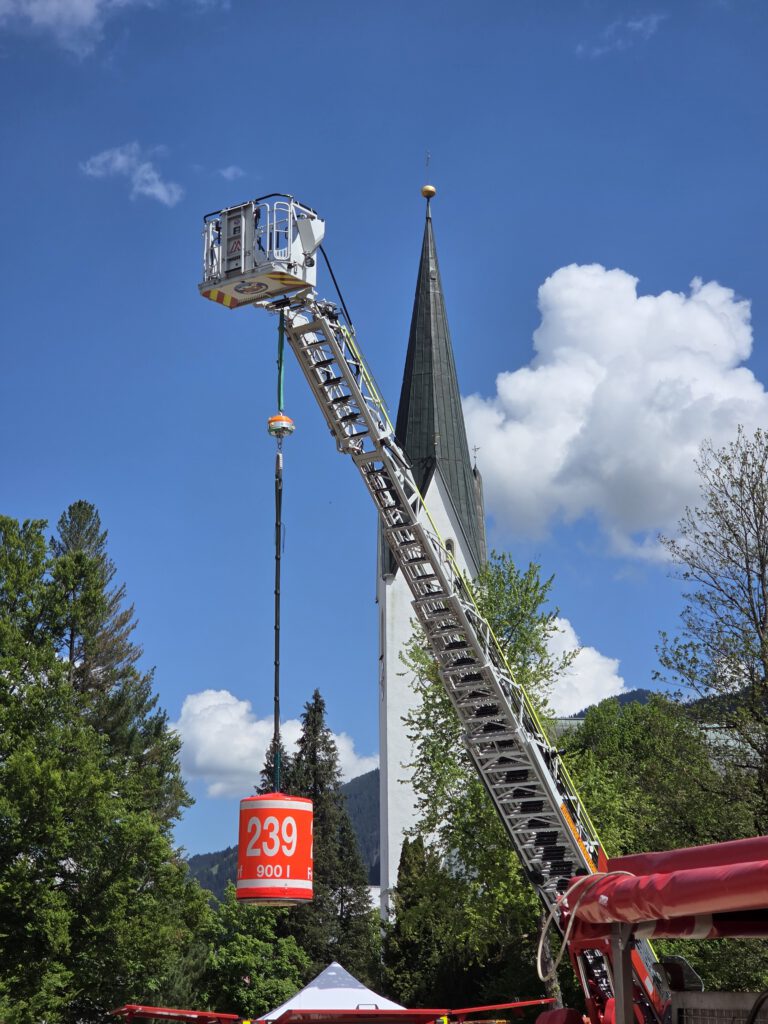

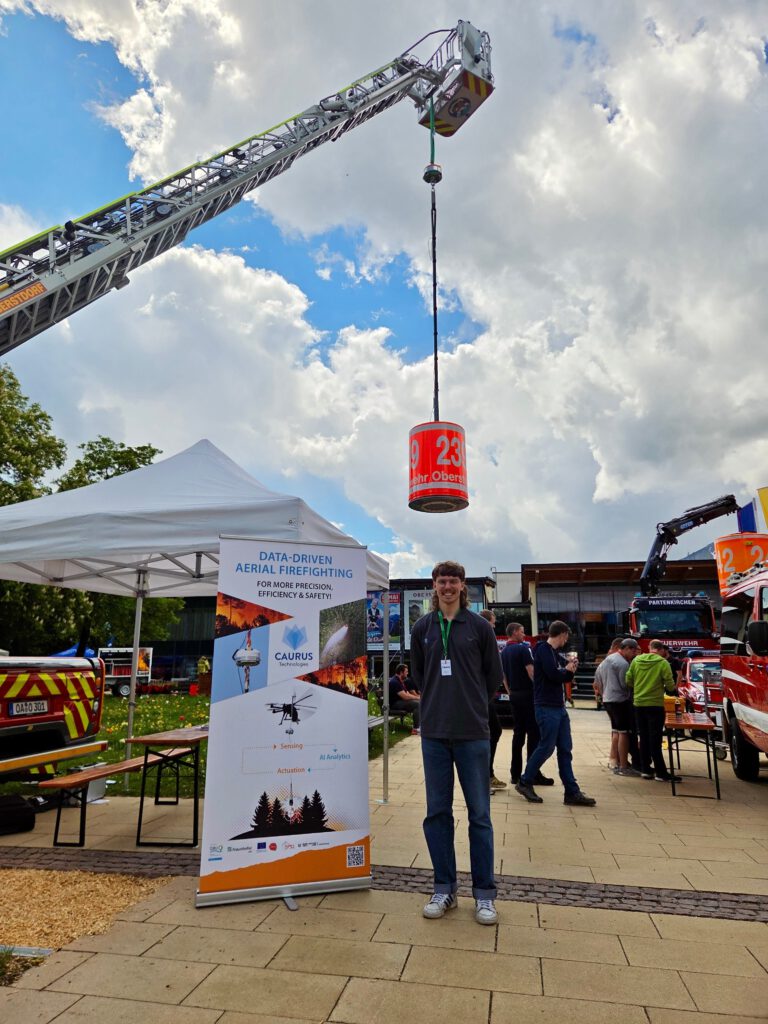
On May 9, 2026 CAURUS Technologies’ Ralf Hansen, Development Engineer, represented the company at the 2nd Alpine Wildfire Symposium in Oberstdorf, following the invitation of the Regional Firefighter’s Association Oberallgäu and Firefighters Oberstdorf e.V . The wildfire symposium is a cross-border conference bringing together experts, industry representatives and practitioners focused on wildfire fighting in the alpine region. Forest fires in the alpine region have become a year-round problem. Studies covering 2005–2022 show significant fire activity in winter and autumn too. Many fires today occur outside the assumed "classic" fire season. Therefore, exchange on experience, novel approaches and innovative technology is becoming increasingly important.
The participants spent a day hearing about hard-won operational experience, having honest debates, and sharing a few uncomfortable truths about the state of aerial firefighting in the Alps. Here are some of the insights Ralf took along:
Helicopters remain a core tool — and they're still flying with limited digital visual aids
Every practitioner in the room agreed: in complex alpine terrain, helicopters are the backbone of aerial fire suppression support. The Latsch/Vinschgau incident in December 2025 alone logged over 7,000 flight minutes across 6 aircraft. And yet — smoke obscured the fire spread, pilots and incident commanders had no shared real-time picture, and situational assessment happened mostly through radio reports from ground crews. Coordinator decisions were often made without complete data.
Drones stay grounded when helicopters fly – interrupting overall surveillance capacity
Across multiple case studies — Innsbruck Nordkette, Partenkirchen, the Allgäu — the same pattern emerged: drones are used only when rotor aircraft are grounded. The moment a helicopter takes off, the drone lands – simple but necessary safety logic. This also means suppression operations happen mostly without a live airborne eye on the fire and the water.
Better data means better decisions — optimizing what's possible
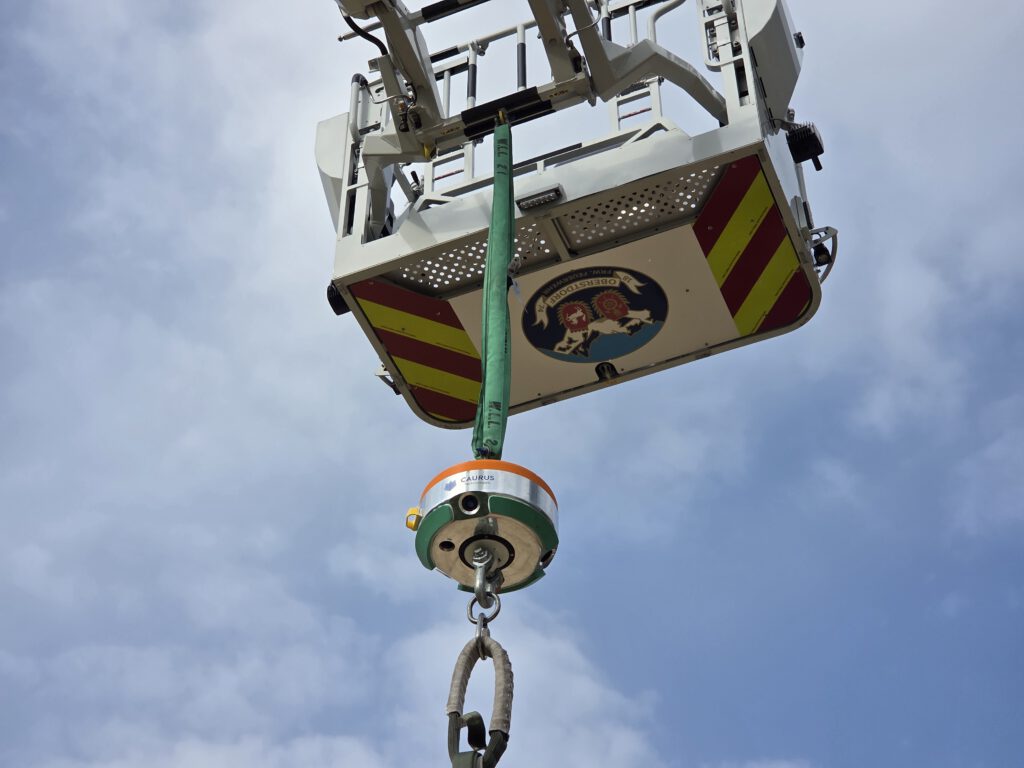
One of the most crucial insights came from the field advisor presentation: in alpine fires, crews often have to decide early whether to fight a fire or simply contain it — because access is difficult, resources are stretched, and the cost of getting it wrong is high. The insight is as simple as clear: if you can reliably improve water drop precision and fire spread visibility, you can intervene in fires that today are simply left to burn.
This very “gap“ drives the work at CAURUS Technologies. Our digital guidance system is designed to work on the helicopter itself — no separate UAV required, no airspace conflict, no added operational complexity. Every suppression flight becomes an observation flight too. Incident commands can get real-time data and a live analysis of where water actually hits, what its impact was versus where the fire is spreading. Adaptation technology at its best!direkt am Hubschrauber selbst funktioniert – es sind keine separaten Drohnen erforderlich, es gibt keine Konflikte im Luftraum und keine zusätzliche operative Komplexität. Jeder Löschflug wird gleichzeitig zu einem Beobachtungsflug. Die Einsatzleitung erhält Echtzeitdaten und eine Live-Analyse darüber, wo das Wasser tatsächlich auftrifft, wie es wirkt und wo sich das Feuer ausbreitet. Adaptation Technologie, wie sie sein sollte!