
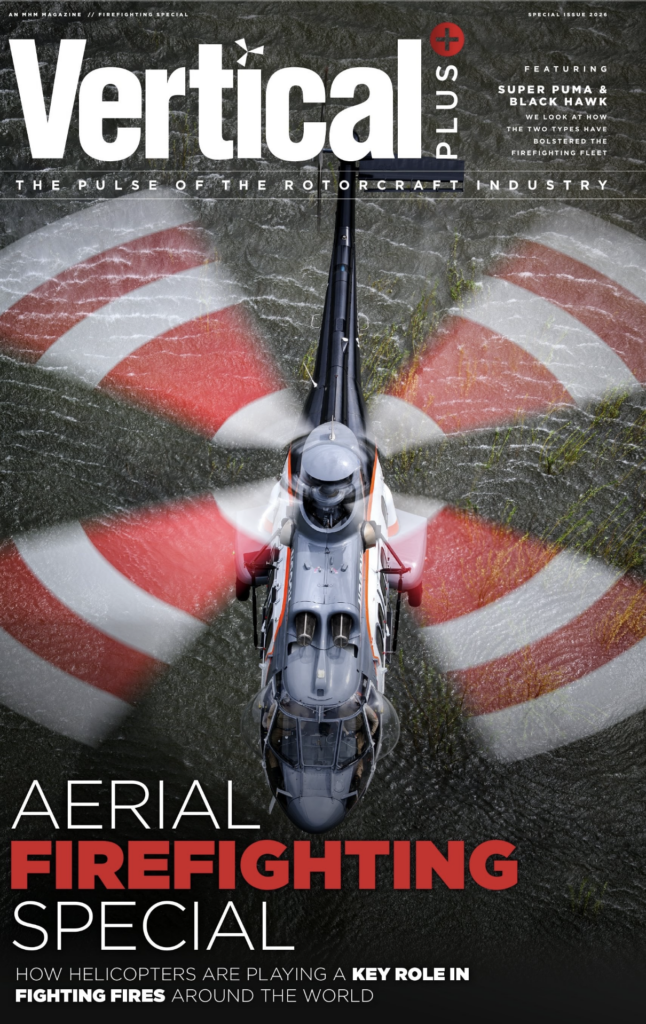
CAURUS Technologies sensor platform has made a splash in the latest Vertical+ Magazine's Firefighting Special (2026) (verticalmag.com). Our technology has been listed among eight innovations in aerial firefighting.
As wildfires become ever more present in the public realm, worldwide interest in innovative solutions that address rising fire threats is garnering increasing interest. Vertical+ Magazine, among the most authoritative voices in the helicopter industry, lists eight innovative technologies for aerial firefighting. Most in the realm of fire detection and mapping, situational awareness and mission communication, drop-level effectiveness and post mission accountability.
CAURUS Technologies’ sensor solution stands out among those listed innovations, as it is the only technology with water efficiency at its heart. In times of increasing droughts and water scarcity, optimized use of water on a fire for biggest impact is turning into a game changer. Studies such as the „UN Water Bankruptcy Report 2026“ are showing that the planetary freshwater boundary has been transgressed and groundwater as well as surface water levels are shrinking. At the same time, large-scale wildfires are on the increase.
Precision extinguishing from the air saves water
The CAURUS Technologies sensor makes every single drop of water count as the technology works on the water drop-level efficiency. It targets the drop-level physics — what actually happens to the water and the fire at the moment of release. The sensor tells you whether the water drop worked — a feedback loop on e.g. suppression effectiveness or other mission-types (protection / prevention / re-supply etc) that will help address not only fires but also the increasingly pressing issue of water scarcity during missions.
Training the sensor functions during actual water drops
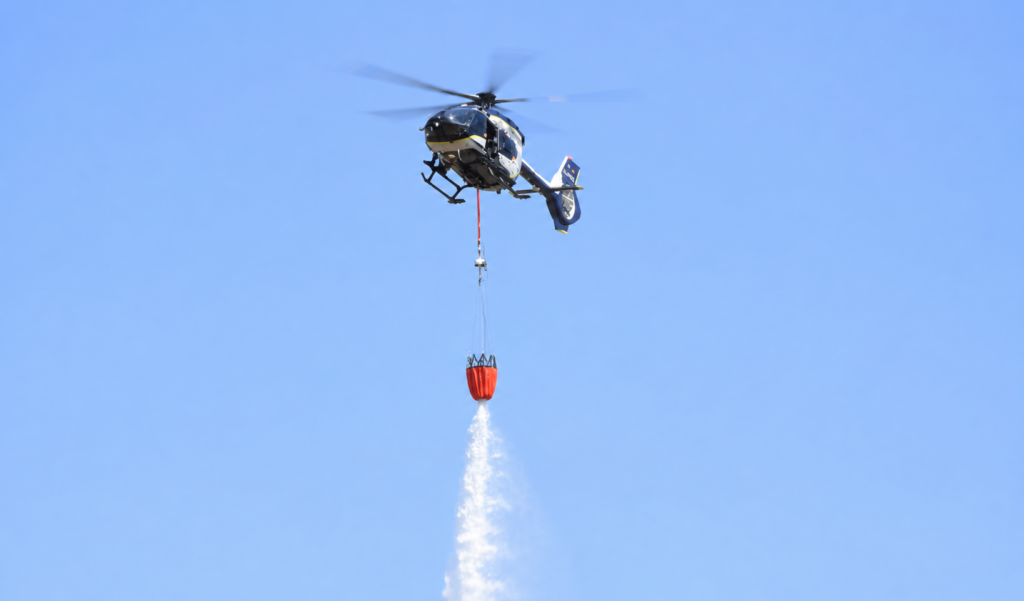
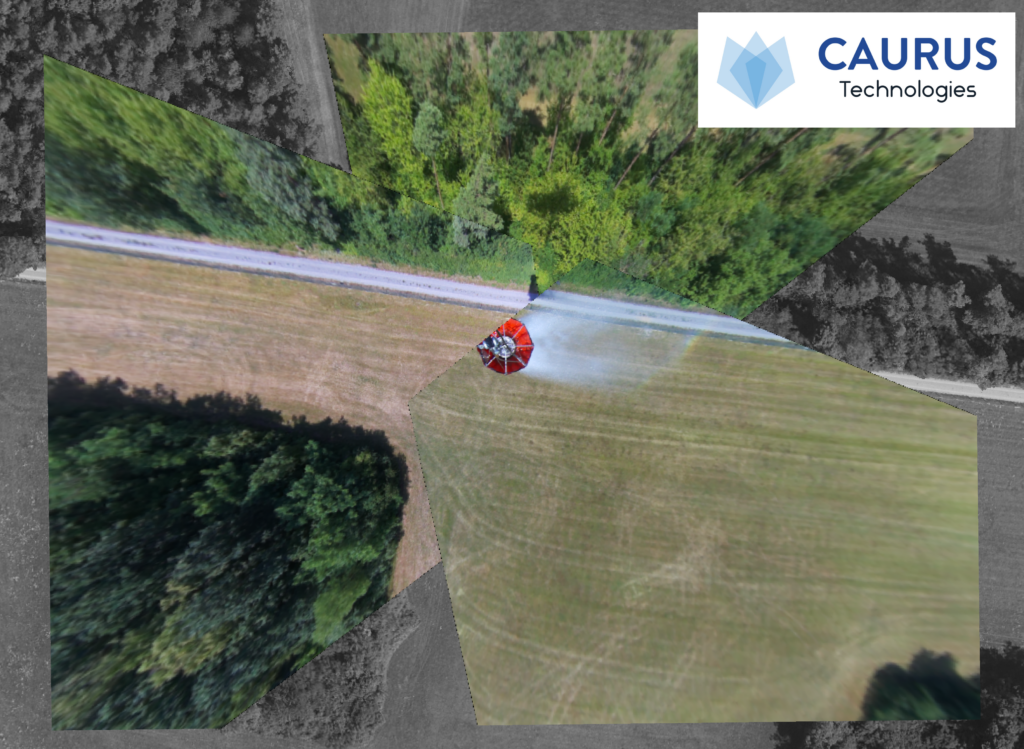
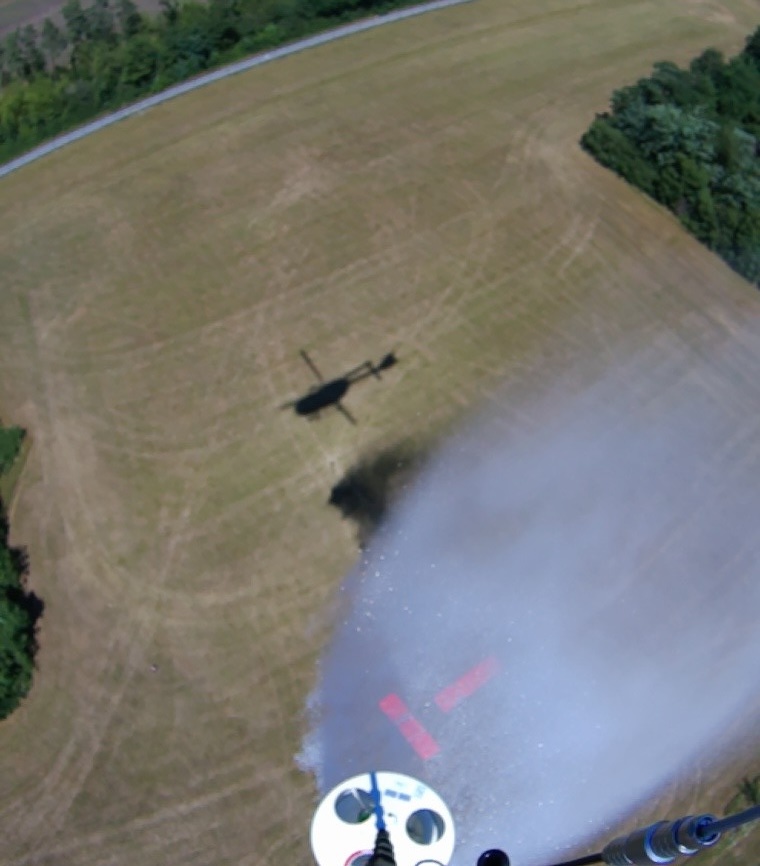
To achieve this, CAURUS Technologies sensor has now flown 40+ training missions in four countries where it recorded and measured some 50+ water drops. Each water drop is different as it is delivered from different heights, under different weather and wind conditions, from different buckets hanging under different platforms (manned and unmanned), over different vegetation and topographies. That makes drop impact analysis complex. And simulating and forecasting drop efficiency for optimized planning a (our) challenge.
From training the sensor to forecasting water's impact
We are addressing this e.g. within Project „Forest Shield“ where every water drop that the sensor captures and measures serves to feed Fraunhofer ITWM’s MESHFREE-simulation software to model the complex dynamics of aerial water drops. Deep-Tech-transfer into uncharted territory: The CAURUS sensor gathers data to recognize where the drop has occurred, how much water was delivered, from what altitude was the water dropped, how much surface was covered, whether the heat profile below has changed etc.
Learning from each drop, our future joint software then simulates the path of the water droplets from the firefighting-bucket to the fire on the ground, taking all environmental factors into account. The goal is to create a learning system to predict water drop efficiency for optimized planning.
Based on actual data, incident commands can understand which water drop was successful and make decisions on where or whether a next water drop has to occur. Good simulation and forecasting can reduce the number of water drops needed to suppress a fire, reduce the number of helicopter flights and thus save water, costs and CO2 emissions.
More flights are on the agenda for this year – reach out if you wish to participate! We continue to make a splash in improving water efficiency in aerial wildfire fighting.
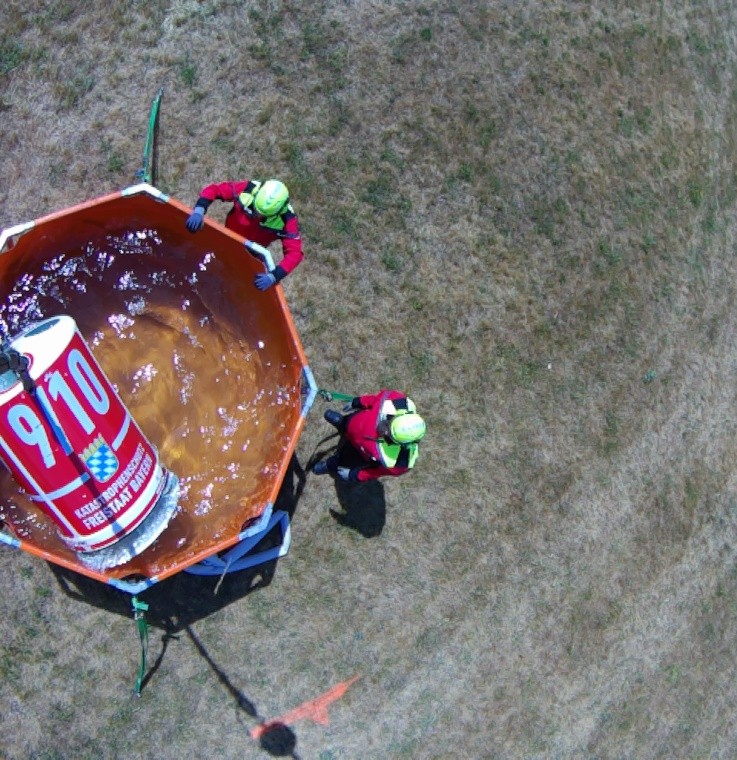
We are grateful to Susanne Schmidt Fotographien (www.susanne-schmidt-fotographien.de) for granting us the use rights to her photos.
We thank the State Firefighting Academy Wuerzburg for supporting us in test flying our sensor.